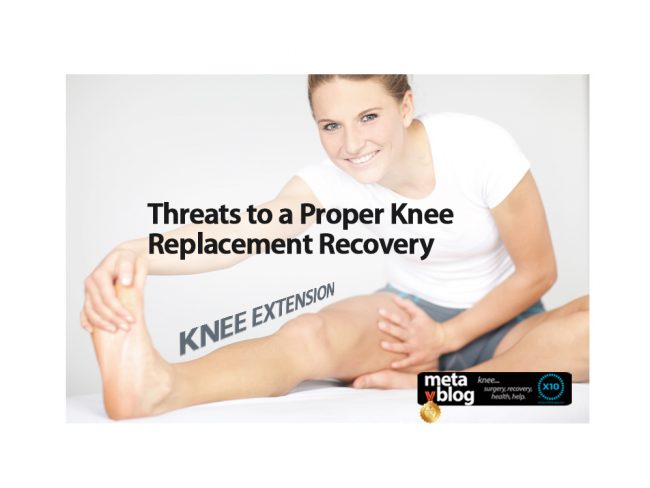
Lack of Full Knee Extension
What happens after knee replacement when there is a lack of full knee extension? We explore this question in this installment of our series entitled ‘Threats to a Proper Knee Replacement Recovery’.


What happens after knee replacement when there is a lack of full knee extension? We explore this question in this installment of our series entitled ‘Threats to a Proper Knee Replacement Recovery’.
Bacteria might enter a person’s body through the wound where the surgical incision was made, after knee replacement surgery. If bacteria reach a person’s new artificial knee joint, they may multiply and cause an infection. All about infection and knee replacement here.
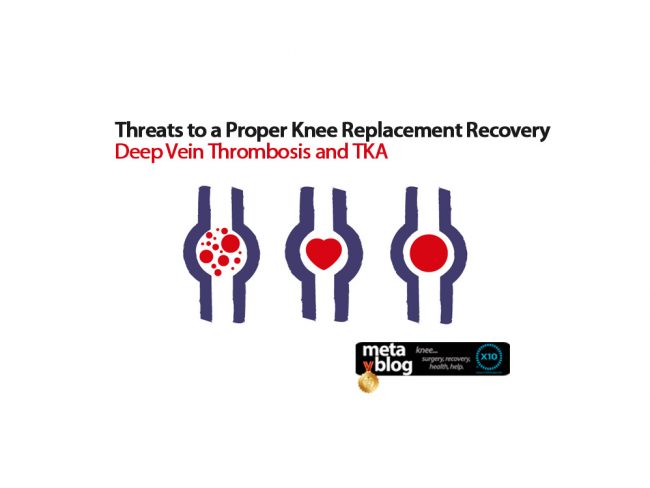
Threats to a Proper Knee Replacement Recovery (Deep Vein Thrombosis and TKA). The first installment in a series devoted to explaining the things in the way of a successful knee surgery recovery.

In early 2016, Frank underwent total knee replacement on his left leg, which went well. The next phase however proved to go NOT so well, and for one reason or another, Frank ended up living with a 102 – 103 degrees of flexion for the next 2+ years. “Normal” flexion for most of us is somewhere between 135 – 140 degrees, with nothing hindering us.
Frank was stuck!