Stories, articles, interviews of knee surgery and recovery… and life after surgery.
We focus on the patient in this weekly podcast. Our objective is to improve the whole knee replacement (and other knee surgeries) experience from months before surgery to months afterwards. In the pod you will also learn about the pre and post-surgery tool, The X10 Knee Recovery System™.
X10 is a proud supporter of Knee Radio 1, a 24/7 radio station all about knee surgery recovery. It’s a broadcast of the best of The Bee’s Knees Podcast.
New content is added on an ongoing basis: interviews with knee surgeons, physical therapists, knee researchers, and knee patients. The hosts on Knee Radio 1 explore threats to a proper knee replacement recovery and a wide range of clinical topics. There is a full 6-hour show on Saturdays (noon to 6:00 p.m.) devoted to Preparation for Knee Replacement (Saturday Prehab). The shows provide health and wellness programming to inspire you to be healthy after a knee surgery.
To visit the website for Knee Radio 1 click here: KNEE RADIO 1
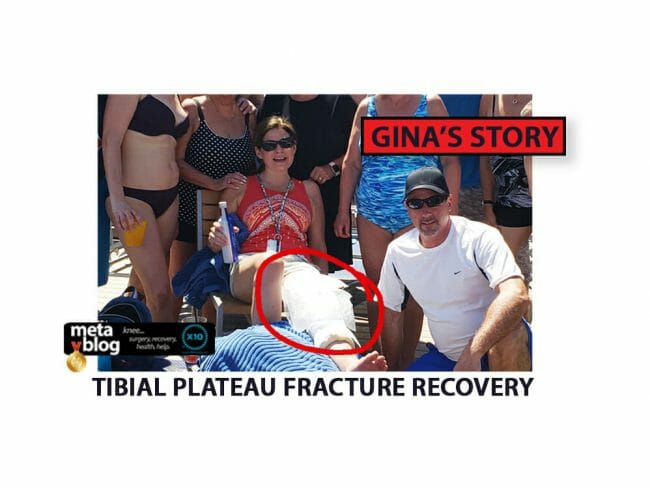
We share an interview with Gina who had a tibial plateau fracture recovery with the X10. She started on the X10 ten weeks after the surgery when she was very disappointed with her recovery. Within two weeks she solved her knee surgery recovery problem.
It was just a steroid injection. Then a septic knee. Then a knee replacement. Then a revision. My two year adventure came to an end this fall. I hope many can learn from my experiences.
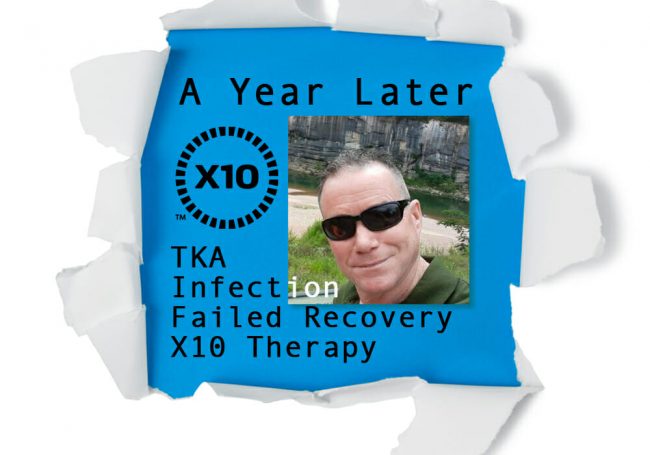
We are pleased to share this interview from The Bee’s Knees Podcast and KNEE RADIO 1. Podcast host PJ Ewing interviews Larry Sallings from Texas. PJ and Larry explore getting back to life a year after TKA.
Fibrosis is another way to look at scar tissue. It’s scar tissue, plus. Some of the scar tissue that we have, you can think of like spiderwebs And so we can move the knee joint a little bit or the shoulder, or whatever joint it happens to be, and we can break those spiderwebs and we can get some range of motion back.
An athlete all his life Tom writes about the challenges of total knee replacement recovery under circumstances of extreme pain. Mary Elliott does an in-depth interview for the podcast and Tom Jurewicz shares his story in this signature article about perseverance, courage and recovery.
To walk properly you need that zero degrees, so that your heel can hit the ground first. After surgery, sometimes what happens is your brain can start sending messages to the leg on how it should move and where it is in space. Your leg can sometimes have a delay on that message. It’s almost like your muscles have to relearn what their job is.
The type of anesthesia used during a surgical procedure will depend on a number of factors, but primarily the nature of the procedure and your medical history. Beyond this, you may be offered a choice of options, and those who anticipate being anxious during the procedure may wish to opt for a greater level of sedation.
So transition your brain from old school therapy to the X10 program. It blows my mind every time. When working with knee patients so many of them move so quickly to 0º and 115º. And you’re just thinking, Oh my goodness!


 THE BEE’S KNEES PODCAST